
History of the San Lorenzo neighbourhood in Rome: workers and clubs
From Rome's working-class neighbourhood to the 1943 bombing, up to today's clubs and live music: the history of San Lorenzo.
The history of the San Lorenzo neighbourhood in Rome starts with the workers and reaches the stages of the clubs: born between 1884 and 1888 between Porta Tiburtina and the Verano cemetery, today it is a university district where music is played almost every night. To hear live music you only need a few steps: the Wishlist Club in Via dei Volsci usually has concerts at 9:00 pm, while the Rebis Speakeasy opens on Tuesday, Friday and Saturday from 10:30 pm to 5:00 am.
Understanding why so much music is played here goes through the history of San Lorenzo in Rome: a neighbourhood built for people who worked, grown next to a large university and marked by war. We retrace the stages with the sources, then we see where live music can be heard today.
History of the San Lorenzo neighbourhood: born for workers (1884-1888)
San Lorenzo was born at the end of the 19th century as a working-class neighbourhood outside the walls: the urbanisation of the area took place between 1884 and 1888, with houses for railwaymen and workers, according to Il Talento di Roma and InLibertà. The name comes from the Basilica of San Lorenzo fuori le mura (Wikipedia). The location is precise, between Porta Tiburtina and the Verano cemetery, and the inhabitants were craftsmen, blacksmiths, labourers, railwaymen and nurses (Sky TG24). Among the workplaces were the Wührer brewery and the freight yard.
On 6 January 1907, at Via dei Marsi 58, Maria Montessori inaugurated the first Casa dei Bambini (Il Talento di Roma; Wikipedia confirms 1907). Zero recalls that on that street stood the Wührer brewery, today home to the Faculty of Psychology, and the first Montessori Casa dei Bambini.
A neighbourhood that resists: the squadristi, the 1943 bombing
In 1922, Sky TG24 reports, San Lorenzo was the only neighbourhood in Rome to oppose the Fascist squadristi. On 19 July 1943 an Allied bombing, aimed at the freight yard, destroyed many buildings in the neighbourhood and damaged the basilica and the Policlinico Umberto I (Wikipedia). On the number of victims the sources do not agree: about 1,500 for Wikipedia, over two thousand for Il Talento di Roma, about 3,000 (of whom 1,674 identified) for InLibertà. Six days later the Grand Council of Fascism voted no confidence in Mussolini (Sky TG24).
That wound has remained in memory: in 1982 Francesco De Gregori dedicated a song to the bombing, on the album Titanic (Wikipedia, InLibertà), and in the Parco dei Caduti del 19 luglio 1943 a monument bears the names of the confirmed victims.
From red neighbourhood to university neighbourhood
In the post-war period, recalls Sky TG24, San Lorenzo is linked to the PCI, Lotta Continua, Potere Operaio and the Student Movement, with the headquarters of l'Unità in Via Taurini; Pier Paolo Pasolini frequented the Pommidoro restaurant. The Sapienza University City, inaugurated in the 1930s (Il Talento di Roma), did the rest: the proximity to the university multiplied pubs, restaurants and breweries, and according to Wikipedia the neighbourhood is increasingly becoming a neighbourhood of students and young artists.
Live music in San Lorenzo: from records to clubs
Music here is not a recent fashion. In 2021 Zero listed among the bands linked to the neighbourhood Assalti Frontali and Banda Bassotti, recalled the record shop Disfunzioni Musicali (from 1981 to 2007) and mentioned among the active clubs Le Mura, the Wishlist and the Beba Do Samba. In 2026 Romeing describes the neighbourhood as, at night, “a lively mix of aperitifs, live concerts and late-night snacks”, with about 60 active artists, 10 galleries and 50 street art works.
Today's venues: four addresses with music
The Wishlist Club is a small club at Via dei Volsci 126, a few minutes' walk from the University City. The programme is punk, hardcore, post-hardcore and indie rock, with Roman and foreign bands. Concerts usually start at 9:00 pm and the ticket changes from one night to another: in November 2026, for example, a concert cost 13.50 euros. The venue does not publish opening hours.
The Rebis Speakeasy has no public address: you find it by asking the teachers of the Scuola di Musica San Lorenzo Aramis, who are its keepers. It opens on Tuesday, Friday and Saturday from 10:30 pm to 5:00 am, with entry until 3:00 am. On Tuesdays there are experimental nights with jazz contaminations, on Fridays open jam sessions, on Saturdays concerts by national and international artists.
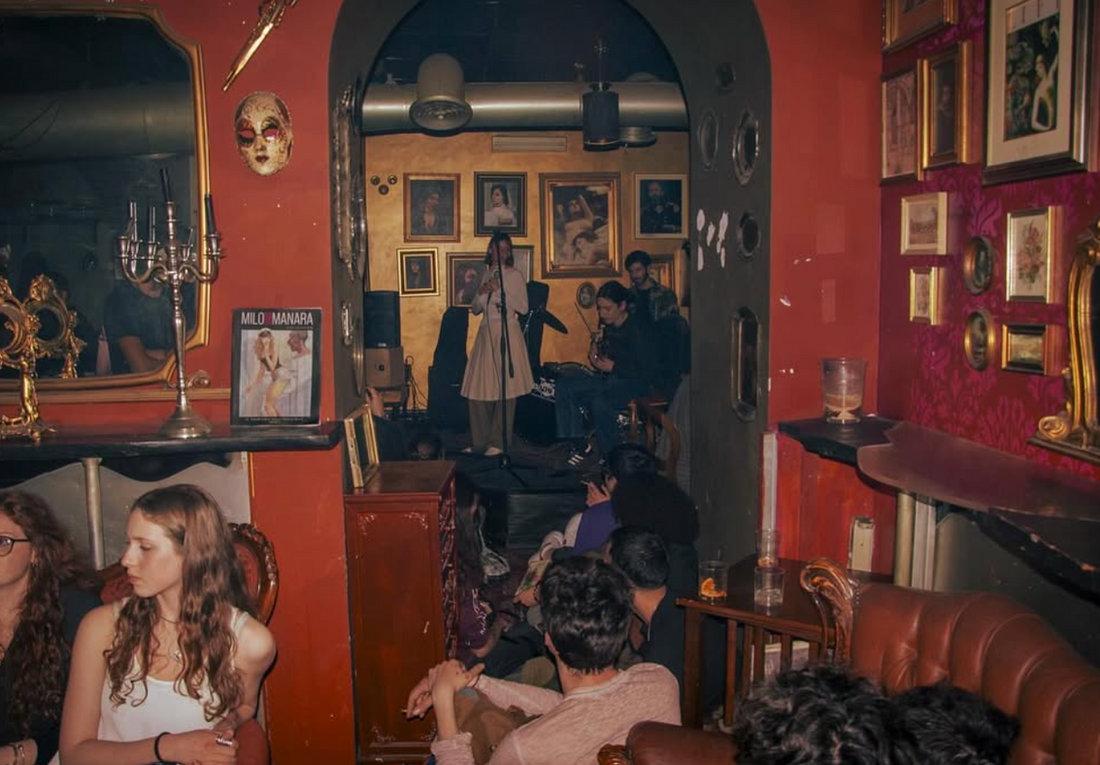
La Casa di Birillo is a sandwich shop at Via dei Marrucini 18 that hosts open mic and jam sessions three nights a week. The kitchen offers sandwiches, burgers and pasta, and the venue is open Monday to Thursday from 11:30 am to 3:00 am. It is not only open formats: on 26 September 2026 the Roman band VicoloCieco played here at 9:00 pm in the “Serata Quindie”.

In the same street, The Apartment is a rooftop lounge bar with DJ sets, open every day from 6:00 pm.

Frequently asked questions about the San Lorenzo neighbourhood
Where is San Lorenzo in Rome?
Between Porta Tiburtina and the Verano cemetery, next to the Sapienza University City (Sky TG24, Il Talento di Roma).
When was the San Lorenzo neighbourhood born?
Between 1884 and 1888 (Il Talento di Roma, InLibertà), as a neighbourhood of workers and railwaymen.
When was San Lorenzo bombed?
On 19 July 1943; estimates of the victims range from about 1,500 to about 3,000 depending on the source.
How do you find the address of the Rebis Speakeasy?
It is not public: you ask the teachers of the Scuola di Musica San Lorenzo Aramis, who are its keepers (venue page on Tasty Beats).
All the venues in San Lorenzo and nearby Pigneto with live music, with addresses and opening hours, are in the Tasty Beats list San Lorenzo and Pigneto.
Sources: Wikipedia, San Lorenzo (Rome); Sky TG24, 25/10/2018; InLibertà, 13/09/2020; Il Talento di Roma, updated 02/11/2026; Zero, 12/01/2021; Romeing, 02/02/2026.


